Choosing the Right Temperature for Exterior House Painting: The Complete 2026 Guide
Reading time: 14 minutes
You’ve finally committed to repainting your home’s exterior. The paint is purchased, the brushes are ready, and you’re eager to get started. But here’s the thing most homeowners discover the hard way: painting on the wrong day — even when it looks perfectly fine outside — can turn a $2,000 project into a crumbling, peeling disaster within a single season.
Temperature isn’t just a comfort factor. It’s the invisible force that determines whether your paint bonds properly, cures evenly, and lasts for years — or starts failing before the ladder even goes back in the garage.
Well, here’s the straight talk: the paint manufacturers’ guidelines aren’t suggestions. They’re the difference between a paint job that holds up through Canadian winters and desert summers, and one that costs you double to redo next spring.
Whether you’re a first-time DIY painter or someone who’s tackled a few exterior projects before, this guide will transform temperature confusion into confident, strategic action.
Table of Contents
- Why Temperature Is the #1 Factor in Exterior Painting Success
- The Ideal Temperature Range: What the Experts Say in 2026
- Painting in Cold Conditions: Risks, Realities, and Workarounds
- The Heat Problem: Why Scorching Days Can Ruin Your Finish
- Humidity and Wind: The Hidden Temperature Companions
- Seasonal Painting Strategy: A Practical Breakdown
- Modern Paint Formulations and Expanded Temperature Tolerances
- Temperature Conditions Comparison Table
- Data Visualization: Optimal Painting Windows by Season
- Frequently Asked Questions
- Your Painting Success Roadmap: Next Steps
Why Temperature Is the #1 Factor in Exterior Painting Success
Ask any professional painter what the most common mistake homeowners make, and the answer is almost universally the same: ignoring weather conditions. Not the choice of paint brand. Not the brush quality. Not even surface preparation — though that runs a close second.
Temperature affects paint at a chemical level. Most exterior latex and acrylic paints rely on a process called film formation, where tiny polymer particles in the liquid paint fuse together as the water evaporates. When temperatures fall too low, this fusion process slows, stalls, or fails entirely. When temperatures rise too high, the water evaporates too quickly before the film can form properly, leaving a brittle, under-bonded surface.
According to a 2025 study by the American Coatings Association, nearly 34% of all exterior paint failures reported by contractors were directly attributed to application in unsuitable temperature or humidity conditions — a figure that has remained stubbornly consistent over the past five years despite improved product formulations.
Consider the story of Marcus T., a homeowner in Denver who repainted his Victorian-era home in late October 2024. He chose a popular latex exterior paint, followed the instructions carefully regarding surface prep, and applied two coats. By March 2025, the paint was cracking along the north-facing wall. The cause? Nighttime temperatures had dropped to 38°F during the curing period — just below the product’s minimum threshold — causing incomplete film formation in those critical first 48 hours.
The takeaway is simple but powerful: getting the temperature right isn’t just about following rules — it’s about protecting your investment.
The Ideal Temperature Range: What the Experts Say in 2026
Industry consensus in 2026 puts the optimal exterior painting temperature window between 50°F and 85°F (10°C to 29°C) for standard latex and acrylic paints. This range applies to both the air temperature and the surface temperature of the wall being painted — two figures that can differ significantly, especially on south-facing walls under direct sunlight.
Air Temperature vs. Surface Temperature
This distinction trips up even experienced DIY painters. On a sunny 75°F afternoon, a south-facing brick or dark-colored wood surface can easily reach 110°F or higher. At that temperature, the paint will flash-dry — the surface skins over before the underlying layers have properly bonded. The result is a finish that looks fine initially but develops lap marks, brush streaks, and eventual peeling.
A simple infrared thermometer, available for under $25 at most hardware stores, can measure surface temperature in seconds. In 2026, many professional painters consider this a non-negotiable tool in their kit — and you should too.
Pro Tip: Always check both the air temperature and surface temperature before starting. If the surface reads more than 10°F higher than the air, wait for indirect light or paint in the shade whenever possible.
The Role of the Dew Point
Another factor that sits hand-in-hand with temperature is the dew point — the temperature at which moisture in the air begins to condense on surfaces. Painting on a surface that’s within 5°F of the dew point is a recipe for adhesion failure, even if ambient temperatures seem perfect.
Most professional contractors follow what’s known as the “5-degree rule”: the surface temperature must be at least 5°F above the current dew point. Weather apps and smart home stations in 2026 — including popular platforms like Weather Underground and Apple’s updated Weather app — now display real-time dew point readings alongside standard forecasts, making this check easier than ever.
Painting in Cold Conditions: Risks, Realities, and Workarounds
Cold weather is perhaps the more treacherous of the two extremes, primarily because its effects aren’t always immediately visible. A paint job done at 45°F might look perfectly acceptable on day one. The problems surface weeks or months later, often after the first freeze-thaw cycle.
When latex paint is applied below 50°F (10°C), several things happen:
- Film formation is incomplete: Polymer particles don’t fuse properly, leaving a porous, weakly bonded film.
- Extended dry time: What should take 1-2 hours can take 4-6 hours, or may never fully dry before the next temperature drop.
- Surfactant leaching: Brownish or streaky residues appear on the surface as chemicals migrate to the paint film — a problem that worsens with each rainfall.
- Freeze damage: If temperatures drop to freezing while the paint is still curing, the expanding ice crystals can destroy the film from within.
Oil-based paints — though less common in 2026 due to VOC regulations across most U.S. states and the EU — have historically been more tolerant of cold, with some formulations applicable down to 40°F. However, they bring their own challenges in cold conditions, including dramatically extended dry times and increased brittleness.
Workarounds for Cool Conditions:
- Paint during the warmest part of the day — typically between 10 AM and 2 PM when solar gain has warmed surfaces.
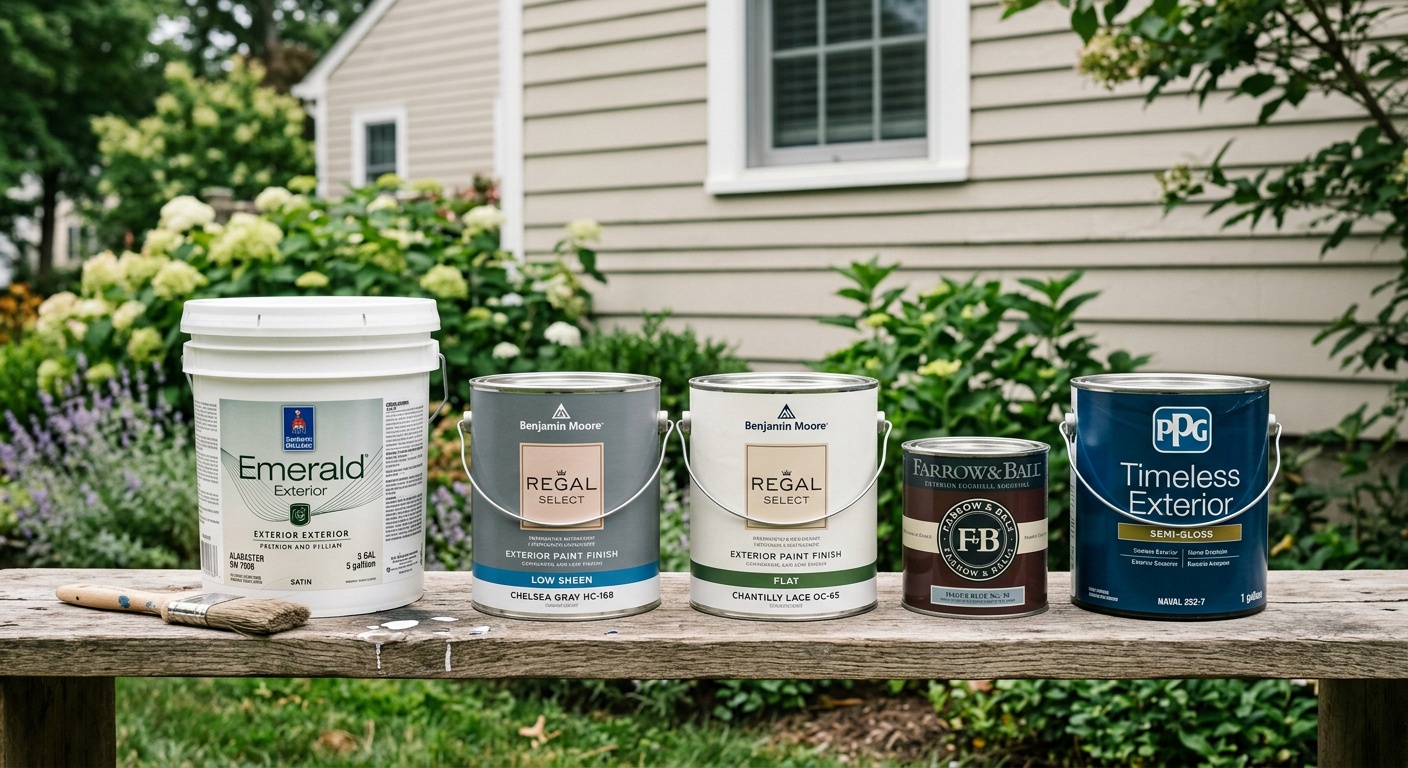
- Use low-temperature formulations — brands like Sherwin-Williams’ Emerald and Benjamin Moore’s Aura now offer products rated to 35°F for application, though 40°F is still generally recommended.
- Ensure adequate cure time — allow at least 48-72 hours at temperatures above 50°F before the next freeze cycle.
- Avoid painting within 24 hours of forecast frost — even if daytime temps are fine.
The Heat Problem: Why Scorching Days Can Ruin Your Finish
While cold weather risks are widely discussed, high-temperature painting failures are equally common — and increasingly relevant as 2026 brings record-breaking summer temperatures to much of North America, Europe, and Australia.
When temperatures exceed 90°F (32°C), paint dries too quickly for proper leveling and adhesion. The paint at the leading edge of your brush stroke dries before the next stroke overlaps it, creating visible lap marks. Bubbling can occur as solvents try to escape through a skin that’s already formed on the surface.
Take the experience of Sandra L., a contractor based in Phoenix, Arizona, who works almost exclusively on exterior repaints. “In summer 2025, we had three consecutive weeks where daytime highs hit 112°F,” she recalls. “We moved entirely to pre-dawn starts — 4:30 AM to 9:30 AM — and finished any remaining work after sunset. It completely changed our scheduling model, but the results were dramatically better.”
Her approach highlights a key insight: in extreme heat climates, time-of-day management becomes your primary temperature-control tool.
Strategies for Hot Weather Painting:
- Paint early morning or evening when surface temperatures are below 85°F
- Follow the shade — move around the house to stay on the shaded side
- Use conditioners and extenders (like Floetrol for latex paints) to slow evaporation
- Keep paint containers in a cooler to prevent premature thickening
- Avoid painting surfaces that have been in direct sun for more than 30 minutes
- Mist walls with water and allow to dry before applying paint (reduces surface temperature by 10-15°F)
Humidity and Wind: The Hidden Temperature Companions
Temperature rarely acts alone. Two atmospheric factors — humidity and wind speed — can dramatically alter how paint behaves at any given temperature, and understanding their interaction is what separates a good paint job from a great one.
Humidity: The ideal relative humidity for exterior painting sits between 40% and 70%. High humidity (above 85%) slows evaporation, extends dry times, and can cause moisture to be trapped beneath the paint film. Low humidity (below 30%) accelerates drying and can cause the same flash-dry problems associated with high heat.
Wind: A light breeze of 5-10 mph can actually be beneficial — it aids in evaporation and helps the paint cure evenly. However, wind speeds above 15-20 mph create problems: dust and debris embed in wet paint, evaporation becomes uneven, and spray applications become virtually uncontrollable.
In practical terms, you should check three numbers before painting each morning: air temperature, surface temperature, and relative humidity. In 2026, free apps like PaintWeather Pro and the updated AccuWeather contractor dashboard provide all three metrics with hourly forecasts — a convenience that didn’t exist in a reliable form just three years ago.
Seasonal Painting Strategy: A Practical Breakdown
The “right” time to paint varies enormously by region, but seasonal patterns provide a useful framework for planning your project across most of North America and comparable climates.
Spring: The Sweet Spot — with Caveats
Late spring (May through early June in most northern regions) offers ideal temperatures in the 55-75°F range, manageable humidity, and long daylight hours. The main risk is unpredictable rain. Spring storms can arrive with little warning, and paint needs at least 4 hours of dry time before exposure to rain — preferably 24 hours for optimal results.
Strategy: Check a 5-day forecast before starting. Avoid beginning the project if rain is forecast within the next 48 hours. Start on the side of the house that dries fastest and can be completed in a single session.
Summer: Manage the Heat, Win the Season
Summer offers the most painting days but also the highest risk of heat-related failures. In 2026, with climate patterns pushing average summer temperatures 2-3°F above the 20th-century baseline across much of the continental U.S., early morning painting has become the default professional strategy in warm regions.
The golden window in summer: 6 AM to 11 AM and 5 PM to 8 PM in most regions. Midday painting should be reserved for shaded surfaces only.
Fall: The Professional’s Preferred Season
Many professional contractors consider September through mid-October the finest painting season of the year. Temperatures are moderate, humidity is often lower than summer, and the stable high-pressure systems common in fall create multi-day windows of ideal conditions. The main risk is shortening daylight and the approach of frost — always check overnight lows before starting a multi-day project.
Winter: Generally Avoid, With Regional Exceptions
In most of the U.S., exterior painting in winter is impractical. Exceptions exist in climates like Southern California, Florida, and the Gulf Coast, where winter temperatures regularly fall in the 50-70°F range. In these regions, winter is actually a preferred painting season due to lower temperatures, reduced UV intensity, and lower humidity.
Modern Paint Formulations and Expanded Temperature Tolerances
One genuinely exciting development in 2025-2026 is the continued advancement of paint chemistry, pushing usable temperature ranges wider than ever before. Several manufacturers have released or updated formulations specifically designed for extended-range application:
- Sherwin-Williams Duration: Updated 2025 formula rated for application down to 35°F, with improved film formation at low temperatures
- Benjamin Moore Aura Exterior: Proprietary Color Lock technology maintains color accuracy and adhesion across a wider temperature range (40-95°F)
- PPG Timeless: 2026 reformulation includes ceramic microspheres that reflect heat, reducing surface temperature by up to 8°F — useful for hot climates
- BEHR Marquee: Now features a patented quick-cure additive that reduces minimum cure time at 50°F from 48 hours to approximately 30 hours
These advances are meaningful — but they’re not magic. Even the most advanced paint formulations have limits, and exceeding them consistently produces subpar results. Use improved tolerances as a safety buffer, not as permission to paint in genuinely unsuitable conditions.
Temperature Conditions Comparison Table
| Condition | Temperature Range | Risk Level | Common Problems | Recommended Action |
|---|---|---|---|---|
| Ideal | 50°F – 85°F (10–29°C) | Low | Minimal if humidity is controlled | Proceed — ideal painting window |
| Too Cold | Below 50°F (<10°C) | High | Incomplete film formation, cracking, surfactant leaching | Avoid or use cold-rated paint only |
| Too Hot | Above 90°F (>32°C) | High | Flash-drying, lap marks, bubbling, poor adhesion | Paint early morning or evening only |
| High Humidity | Any temp, RH >85% | Medium-High | Extended dry times, moisture entrapment, mildew risk | Wait for lower humidity window |
| Borderline Cool | 50°F – 55°F (10–13°C) | Medium | Slower cure, vulnerable to overnight frost | Use with caution; confirm overnight temps stay above 50°F |
Data Visualization: Optimal Painting Hours by Season
The chart below illustrates the estimated percentage of usable daily painting hours by season in a temperate North American climate (Zones 5-7). These figures account for temperature, light availability, and typical weather patterns based on 2025-2026 climate data.
Usable Painting Hours as % of Daylight — by Season
*Based on temperate North American climate zones 5-7. Winter figures represent southern portions of this range only.
Frequently Asked Questions
Can I paint exterior surfaces if the temperature drops at night, even if daytime temps are fine?
Yes — with caution. The key is the curing temperature, not just the application temperature. Most latex paints need at least 48 hours above 50°F to cure properly. If daytime temperatures are in the 60s but nights are dropping to 40°F, you’re introducing significant risk. Check the forecast for overnight lows before beginning. If nighttime temps will fall below 50°F within 48 hours of painting, either delay the project or use a low-temperature-rated formulation specifically designed to cure at 35-40°F.
What happens if it rains shortly after I’ve painted the exterior?
The impact depends on how recently the paint was applied. In the first 1-2 hours, rain can wash away or heavily streak freshly applied paint, and you’ll likely need to recoat those sections. After 4 hours of dry time at optimal temperatures, most exterior latex paints are considered “rain safe” — meaning light rain won’t damage the surface. However, “rain safe” is not the same as “cured.” Full cure still requires 48-72 hours of suitable temperature. A heavy downpour in the first 24 hours after painting, even if the surface feels dry, can still cause adhesion issues in some formulations.
Are expensive paints really more temperature-tolerant, or is that just marketing?
There’s genuine substance behind the premium, but it’s not unlimited. Higher-end formulations like Benjamin Moore Aura, Sherwin-Williams Duration, and PPG Timeless do use more advanced polymer technology that provides measurably better film formation at temperature extremes. Independent testing by Consumer Reports in 2025 found that premium exterior paints performed 23% better in low-temperature adhesion tests compared to mid-range products. That said, no paint performs well at 32°F or 110°F surface temperature, regardless of price. The premium buys you a wider usable range and better durability within that range — not immunity to temperature rules.
Your Painting Success Roadmap: Next Steps
Here’s the reality of exterior painting in 2026: the science is clearer than ever, the tools for checking conditions are free and accessible, and the paints available today are genuinely more forgiving than they were a decade ago. Yet temperature-related failures remain among the most common and most expensive painting mistakes homeowners and even professionals make.
The difference between a paint job that lasts 8-12 years and one that needs redoing in 2-3 years often comes down to the choices made before the first brush stroke. Here’s your actionable roadmap:
- Invest in an infrared thermometer — Under $25. Non-negotiable. Check surface temperature every morning before painting and again if conditions change.
- Build a weather-checking routine — Use a weather app that shows dew point and hourly temperature forecasts. Set the painting window only after reviewing a 48-hour forecast.
- Choose your paint for your climate, not your color palette first — If you’re in Phoenix or Minneapolis, temperature tolerance should be the first filter you apply when selecting a product.
- Plan your work order around sun movement — Map which walls receive direct sun and at what times. Paint each wall during its shaded period whenever possible in warm months.
- Document your conditions — Take a quick note of the temperature, humidity, and time when you start each session. If issues arise later, you’ll have invaluable diagnostic data.
As climate variability continues to reshape what “normal” seasonal weather looks like across North America and globally, the ability to read and respond to conditions in real time is becoming an increasingly valuable skill — not just for painting, but for every aspect of home maintenance.
So here’s the question worth sitting with: How many of your past painting projects may have been affected by temperature conditions you didn’t think to check — and what would you do differently now?
Your home’s exterior is both its first impression and its primary defense against the elements. Getting the temperature right isn’t just a technical detail — it’s the foundation everything else is built on.