Beat the Heat With Smart Summer Interior Paint Choices
Reading time: 12 minutes
Every summer, millions of homeowners crank up the air conditioning and watch their energy bills climb — often without realizing that the color on their walls is working against them. It sounds almost too simple, but the paint choices you make inside your home have a measurable, science-backed impact on how hot or cool a room feels, how much your HVAC system labors, and ultimately, how comfortable your family is when temperatures spike.
Here’s the straight talk: you don’t need a full renovation to make your home more heat-resilient. Sometimes the smartest upgrade is a fresh coat of the right paint in the right room. Whether you’re a first-time homeowner curious about color psychology or an experienced renovator ready to go deep on pigment science and reflectivity, this guide has something genuinely useful for you.
Let’s turn what feels like an aesthetic decision into a strategic one — and help you beat the heat without breaking the bank.
Table of Contents
- The Science Behind Paint and Indoor Temperature
- Best Interior Paint Colors for Summer Cooling
- Paint Finishes: The Overlooked Cooling Variable
- Room-by-Room Strategy Guide
- Real-World Examples: What Worked and Why
- Color Reflectivity Comparison Chart
- Comparative Color Cooling Performance Table
- Common Challenges and How to Overcome Them
- Frequently Asked Questions
- Your Summer-Ready Home: Next Steps
The Science Behind Paint and Indoor Temperature
Before you grab a paint swatch, it’s worth understanding why paint color influences temperature at all. The core concept is thermal absorption. Dark surfaces absorb more radiant heat energy from sunlight and artificial light, while lighter surfaces reflect more of that energy away. This principle, known as solar reflectance, is the backbone of everything from NASA’s spacecraft coatings to the color of your living room walls.
In practical terms, a wall painted in deep charcoal or navy blue absorbs a greater percentage of the light energy that hits it — from windows, skylights, and even lamps — and re-radiates that energy as heat into the room. A wall painted in soft white or pale sage does the opposite: it bounces most of that energy back, keeping the ambient temperature lower without any mechanical assistance.
According to a 2025 study published by the Lawrence Berkeley National Laboratory, interior surfaces with high reflectance values can reduce a room’s perceived temperature by 3 to 7 degrees Fahrenheit compared to surfaces with low reflectance, under identical ambient conditions. That’s not just comfort — that’s a measurable reduction in how hard your cooling systems have to work.
“Paint is a passive cooling technology that most homeowners ignore entirely. The right color and formulation on your interior walls functions like a low-cost thermal management system.” — Dr. Priya Nambiar, Building Science Researcher, UC Berkeley, 2025
The physics gets more nuanced when you factor in Light Reflectance Value (LRV) — a standardized scale from 0 (absolute black, absorbs all light) to 100 (pure white, reflects all light). Most practical interior paints fall between 10 and 90. For summer-focused painting, targeting colors with an LRV of 55 or above is a solid benchmark that balances thermal performance with aesthetic livability.
How Heat Transfer Works Through Wall Surfaces
Heat moves through your walls via three mechanisms: conduction (heat passing through materials), convection (heat circulating through air), and radiation (electromagnetic heat energy traveling from surfaces). Paint primarily addresses the radiation component, which is why it’s particularly effective in rooms that receive direct sunlight through windows.
When sunlight enters a room and strikes a dark-painted wall, that wall warms up and begins radiating heat back into the space — a phenomenon called secondary heat gain. With a light-colored, high-LRV paint, that same wall reflects the majority of the light energy, significantly reducing secondary heat gain. Combined with other strategies for how to cool room without ac, smart paint choices can make a genuinely dramatic difference in small and medium-sized spaces.
The Role of Paint Pigments in Thermal Performance
Not all light-colored paints are created equal. The specific pigments used in a paint formulation affect its thermal behavior independently of how light or dark the color appears to the human eye. In 2024 and 2025, several major paint manufacturers — including Sherwin-Williams, Benjamin Moore, and PPG — introduced what the industry now calls “cool pigment” technology: formulations that use near-infrared (NIR) reflective pigments to bounce heat-carrying light frequencies even in medium and dark colors.
This is significant because it means you no longer have to sacrifice your preferred aesthetic for thermal performance. A medium-toned terracotta or muted olive green formulated with cool pigments can perform thermally closer to a pale cream than its visual depth would suggest. Look for products labeled “Cool Color Technology” or “NIR-reflective” when shopping in 2026.
Best Interior Paint Colors for Summer Cooling
Let’s get practical. Here are the color families that consistently deliver the best thermal performance for summer interiors, along with why they work and what to watch out for.
1. Crisp Whites and Off-Whites
The highest LRV options available, whites reflect the maximum amount of light and radiant heat. Pure bright white (LRV 85–92) is ideal for south-facing rooms that absorb the most sunlight. Off-whites with warm undertones (cream, ivory) offer LRVs in the 75–85 range and feel less clinical while still delivering excellent thermal performance. In 2026, popular picks include Benjamin Moore’s “Chantilly Lace” (OC-17) and Sherwin-Williams’ “Alabaster” (SW 7008).
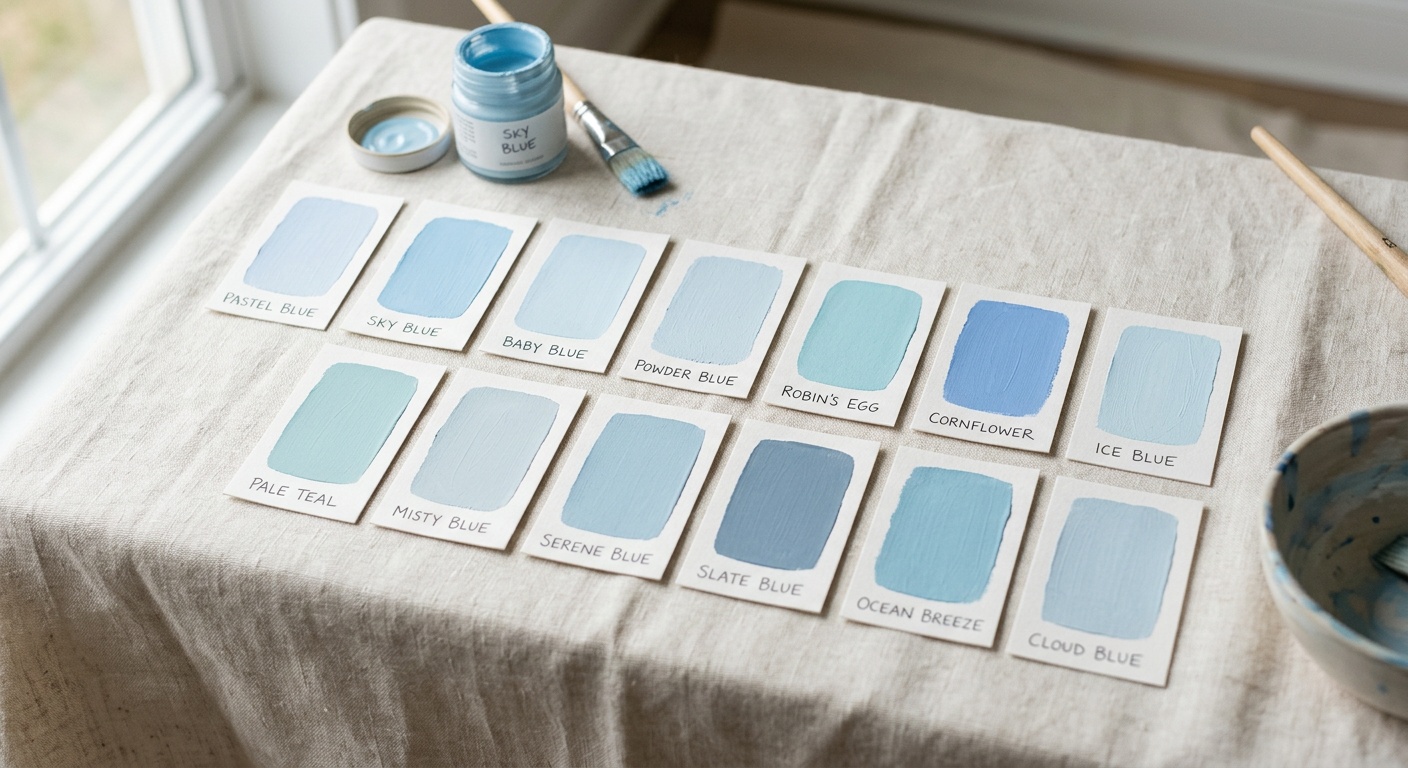
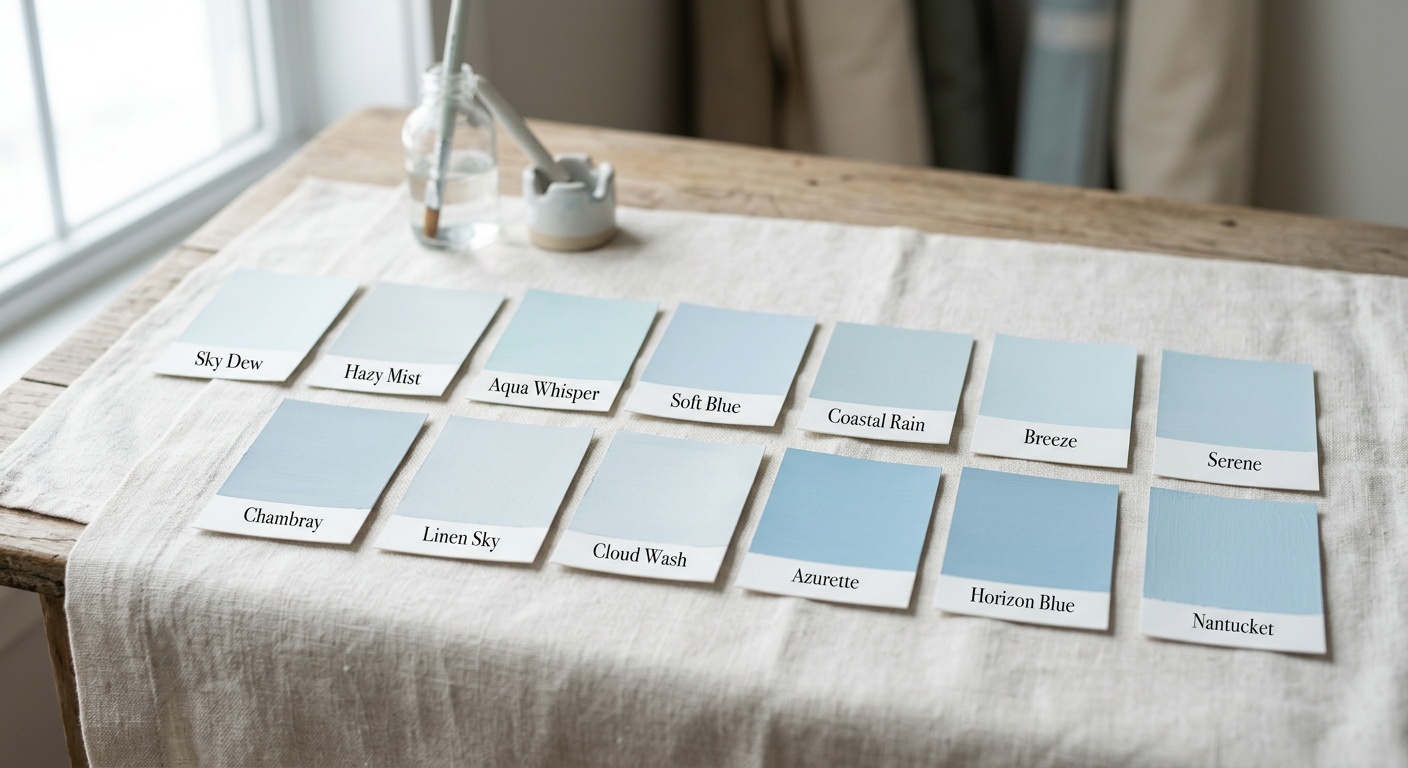
2. Soft Blues and Blue-Greens
Beyond their reflective properties (LRV typically 50–70), pale blues and aquas have a well-documented psychological cooling effect. Color psychology research from the University of Sussex (2024) confirmed that rooms painted in cool-hued blues are perceived as up to 10% cooler than identically tempered rooms painted in warm tones like red or orange. This makes them a powerful double-action tool: physically reflective AND psychologically refreshing.
3. Soft Greens and Sage Tones
Pale greens, sage, and seafoam sit in a useful middle ground — warm enough to feel inviting but cool enough to maintain good thermal performance. They pair beautifully with natural wood tones and linen textures, making them a favorite for 2026 interior design trends. Look for LRVs above 55 for the best thermal results.
4. Lavender and Soft Lilacs
An underrated choice, pale purples carry both high reflectivity and a serene, cool visual temperature. They work particularly well in bedrooms where sleep-comfort is the priority during hot summer nights.
5. Light Neutrals: Greige and Stone
For homeowners who want something more design-forward than stark white but still thermally smart, warm greige (gray-beige) tones with LRVs above 60 offer an excellent compromise. They’re versatile, trending hard in 2026, and perform well in moderate-sunlight rooms.
Paint Finishes: The Overlooked Cooling Variable
Color gets most of the attention in summer paint conversations, but finish — the sheen level of the dried paint — also plays a meaningful role in how a room handles heat and light.
- Flat/Matte finishes: Absorb light rather than reflect it, which can reduce glare but also slightly increases surface heat absorption. Best for ceilings and low-traffic areas where maximum light absorption isn’t a concern.
- Eggshell finishes: A mild sheen that reflects slightly more light than matte, making them a solid all-purpose choice for walls in moderate-sunlight rooms.
- Satin finishes: Offer noticeably better light reflectivity than matte or eggshell, making them a smart choice for kitchens, bathrooms, and high-sunlight rooms where you want to maximize the thermal benefit of your color choice.
- Semi-gloss and gloss finishes: The highest light reflectance of all finishes, but their strong sheen makes imperfections visible and can feel visually harsh on large wall surfaces. Best reserved for trim, doors, and accent surfaces where the reflectivity boost is concentrated rather than overwhelming.
Pro Tip: If you’re painting a room that gets intense afternoon sun, consider pairing a light-colored wall paint in satin finish with a white or near-white ceiling in flat finish. The ceiling absorbs rather than bounces direct overhead light (reducing glare), while the walls work harder to reflect horizontal light from windows. This combination is particularly effective in west-facing rooms.
Room-by-Room Strategy Guide
Smart summer painting isn’t one-size-fits-all. The right approach varies significantly depending on a room’s orientation, function, and how heat affects your experience in it.
Living Rooms and Family Rooms
These spaces typically have large windows and receive the most natural light. Prioritize LRV above 60. Soft blues, warm whites, and greige tones are ideal. If your living room faces south or west, this is where strategic color makes the biggest measurable difference.
Bedrooms
Sleep quality suffers dramatically when rooms are even slightly warmer than optimal (which research places at 65–68°F / 18–20°C for adults). Pale lavenders, soft greens, and muted aquas provide both thermal benefit and psychological calm. Avoid dark accent walls in bedrooms you use during summer — they create localized heat pockets, especially if near windows.
Kitchens
Kitchens generate their own heat from appliances, making thermal paint performance especially valuable here. Go as light as possible — clean whites, pale yellows with LRV above 70, or soft grey-greens. Satin or semi-gloss finishes make practical sense for washability and deliver the added bonus of better light reflectance.
Home Offices
With remote and hybrid work now standard in 2026, more people spend significant hours in home office spaces during summer. Soft blue-greens and pale sage tones are excellent here — they support focus, reduce visual fatigue, and keep the space feeling cooler through long working days.
Bathrooms
Pale aqua, crisp white, and soft gray-blue are classic bathroom choices that also happen to be excellent summer performers. The high humidity of bathrooms can slightly affect surface temperature perception, so aim for satin or semi-gloss finishes to maximize reflectivity in compact spaces.
Real-World Examples: What Worked and Why
Case Study 1: The Phoenix, Arizona Renovation (2025)
A homeowner in Phoenix — a city that regularly records summer temperatures above 110°F — undertook a full interior repaint in the summer of 2025. The project swapped every major room from saturated deep jewel tones (LRV average: 18) to a coordinated palette of off-whites and pale blue-greens (LRV average: 72). Using a smart home temperature monitoring system, the homeowner recorded an average indoor temperature reduction of 4.2°F in sun-exposed rooms during peak afternoon hours, without any changes to HVAC settings or usage. Monthly electricity bills dropped by approximately 11% over the following three summer months. The investment: roughly $1,800 in paint and labor for a 1,800 sq ft home.
Case Study 2: The Brooklyn Apartment Challenge (2026)
A renter in a west-facing Brooklyn apartment faced a different challenge: a landlord who wouldn’t permit dramatic color changes, requiring all walls to remain within the “neutral” category. Working within those constraints, the tenant focused on LRV and finish rather than color. They chose a high-LRV greige (LRV 74) in satin finish, applied to all main walls, replacing the existing builder-grade flat white that, despite appearing lighter, had a lower LRV of 62 due to its pigment composition. The result was a perceptible improvement in room comfort during afternoon hours — and a subtler, more sophisticated aesthetic as a bonus. This case illustrates that even within tight aesthetic or landlord restrictions, smart paint choices can yield real results.
Case Study 3: The Chicago School Classroom Project (2025)
A public school in Chicago’s south side undertook a evidence-based classroom repaint in spring 2025, guided by building science consultants. Twenty classrooms were repainted in pale sky blue and soft sage (average LRV 65), replacing institutional yellows and greens (average LRV 48). Student-reported comfort scores during June and September — the hottest months of the school year — improved by 23% in repainted rooms compared to unchanged classrooms. Teachers also reported improved student focus during afternoon hours, correlating with both thermal and psychological effects of the new palette.
Color Reflectivity Comparison: LRV by Paint Family
Light Reflectance Value (LRV) by Interior Paint Color Family
Higher LRV = More light reflected = Cooler room performance. Scale: 0–100.
Comparative Color Cooling Performance Table
| Paint Color Family | Avg. LRV Range | Est. Temp. Reduction | Best Room Pairing | 2026 Trend Rating |
|---|---|---|---|---|
| Crisp White / Off-White | 75–92 | 5–7°F | Kitchens, South-Facing Rooms | ⭐⭐⭐⭐⭐ |
| Pale Blue / Aqua | 55–72 | 4–6°F | Bedrooms, Bathrooms | ⭐⭐⭐⭐⭐ |
| Soft Green / Sage | 50–68 | 3–5°F | Living Rooms, Home Offices | ⭐⭐⭐⭐ |
| Light Greige / Stone Neutral | 55–72 | 3–4°F | All Rooms, Especially North-Facing | ⭐⭐⭐⭐ |
| Deep Navy / Charcoal | 8–22 | +2–4°F (increase) | North-Facing, Accent Only | ⭐⭐⭐ (winter) |
Common Challenges and How to Overcome Them
Challenge 1: “I Love Dark Colors — Do I Have to Give Them Up?”
This is the most common pushback, and the good news is: not entirely. Dark accent walls, when used strategically, can coexist with a summer-smart paint strategy. The key is placement and proportion. Reserve dark colors for north-facing walls that don’t receive direct sunlight, or use them on a single accent wall in a room where the other three walls are light and highly reflective. The net thermal impact of one dark wall in a four-wall room is significantly diluted when the rest of the room is high-LRV.
Additionally, as mentioned earlier, 2026’s cool-pigment formulations now offer dark colors with meaningfully better NIR reflectance than traditional dark paints. Sherwin-Williams’ “Latitude” collection and PPG’s “ThermoShield Interior” line both include darker tones engineered with NIR-reflective pigments. They’re not as thermally efficient as whites, but they’re a genuine step forward for fans of moody, saturated interiors.
Challenge 2: Rental Restrictions and HOA Limitations
Renters and HOA members often face strict color limitations that seem to eliminate their options. But as the Brooklyn case study showed, the real game-changer is LRV within your permitted palette — not necessarily dramatic color change. If your landlord requires “neutral” colors, focus on finding the highest-LRV neutrals available. Request paint specifications from your landlord’s approved brand and compare LRV numbers on their own color charts. A 10–15 point LRV difference within the “neutral” category can still yield measurable thermal results.
If you’re in an HOA that restricts exterior colors but not interior, remember that interior painting is almost always unrestricted. Focus your efforts and budget there for maximum personal comfort impact.
Challenge 3: Coordinating Summer-Smart Paint With Existing Furniture and Decor
One of the most practical barriers to repainting is the fear that a new color palette will clash with existing furniture, rugs, and art. The strategic answer here is to lean into the versatility of your best thermal performers. Light blues, warm whites, and soft greiges are among the most universally compatible backdrop colors in interior design — they tend to make furniture “pop” rather than compete with it. If your existing decor includes warm wood tones, warm whites and greige are your thermal allies. If you have cool-toned metal or glass furniture, soft blues and pale aquas will coordinate beautifully while keeping your room cooler.
Quick Scenario: Imagine you have a living room with rust-orange sofas and walnut coffee tables. Replacing deep navy walls with a warm, creamy off-white (LRV 80) would dramatically lighten and cool the space while making those warm furniture tones even richer and more intentional. The result is both thermally and aesthetically superior — a genuine win-win.
Frequently Asked Questions
Does interior paint color really make a significant temperature difference, or is this overstated?
The difference is real and measurable, though it’s most significant in rooms with substantial natural light exposure and in climates with intense summer sun. Research consistently shows 3–7°F reductions in high-sunlight rooms when switching from low-LRV to high-LRV paint. In rooms with minimal windows or heavy shading, the effect is smaller but still present due to the reduction in secondary heat radiation from artificial lighting. The impact is amplified when combined with other passive cooling strategies like window films, reflective blinds, and improved ventilation.
What is LRV and how do I find it for a specific paint color?
LRV stands for Light Reflectance Value — a number from 0 to 100 indicating how much light a paint color reflects versus absorbs. A higher number means more reflection and cooler thermal performance. You can find the LRV of any major brand’s paint color on their official website or on the physical paint chip at the store — it’s typically listed in small print on the chip or in the brand’s digital color tool. All major brands including Sherwin-Williams, Benjamin Moore, Behr, PPG, and Farrow & Ball publish LRV data for their full color ranges as of 2026.
Should I also repaint my ceilings for summer cooling benefits?
Absolutely — and this is one of the most underutilized summer paint strategies. Ceilings painted in flat or matte white (LRV 85–92) reflect downward light back into the room rather than absorbing it, reducing heat buildup particularly in top-floor rooms where roof-radiated heat is a significant factor. A white ceiling also amplifies the visual lightness of walls, making the whole room feel airier and cooler. If your ceiling is currently painted in a mid-tone or off-white that has yellowed over time, repainting it in fresh high-LRV white is one of the highest-impact, lowest-cost summer paint projects you can undertake.
Your Summer-Ready Home: The Smart Painter’s Action Plan
Here’s the bigger picture: as climate patterns continue shifting in 2026, with more cities experiencing record summer temperatures and utility costs rising across North America, Europe, and Asia-Pacific, passive cooling strategies like smart paint choices are graduating from “nice to have” to “strategically essential.” The homeowners who are building genuine heat resilience into their living spaces aren’t just more comfortable — they’re less dependent on expensive mechanical cooling and more prepared for the summers ahead.
You now have a complete framework. Here’s your step-by-step action plan to put it into practice:
- Audit your rooms by sun exposure. Walk through your home at noon on a sunny day and note which rooms feel significantly warmer. These are your highest-priority repainting targets for thermal impact.
- Check the LRV of your current paint. If you don’t know what’s on your walls, compare paint chips from your existing color against a brand’s LRV chart. If you’re below 55 in a sun-exposed room, you have significant room to improve.
- Choose your palette strategically — color + finish together. Target LRV 60+ for sun-exposed rooms, and choose satin finish over matte where practical to maximize reflectivity from your color choice.
- Explore cool-pigment formulations if you love dark tones. Ask at your paint store specifically about NIR-reflective product lines — they’re increasingly available from all major brands in 2026 and represent a genuine innovation for design-forward homeowners.
- Layer your passive cooling strategies. Paint is powerful but even more effective when combined with reflective window treatments, ceiling fans, and smart ventilation. Think of your repaint as the foundation of a broader thermal management approach.
The investment in smart summer paint is modest — typically $200 to $2,000 depending on home size and whether you DIY or hire professionals. The return, measured in comfort, energy savings, and genuine livability over every summer for years to come, is substantial.
Here’s the question worth sitting with: If a few cans of paint in the right color could meaningfully reduce your home’s temperature, lower your energy bills, and make every summer room more comfortable — what’s the one room you’d start with today?