How to Get Accurate Exterior House Painting Quotes Every Time
Reading time: 14 minutes
You’ve finally decided to give your home’s exterior a fresh look. You reach out to three contractors, and within a week you’re staring at three wildly different quotes — one for $2,800, one for $6,500, and one for $11,000. Same house. Same job. So what’s going on?
This is one of the most frustrating experiences homeowners face, and it happens more often than you’d think. The exterior painting industry in 2026 is more complex than ever, with material costs still elevated from supply chain shifts, labor markets tightening in most metropolitan areas, and a flood of new contractors entering the market with varying levels of expertise and pricing transparency.
Here’s the straight talk: getting accurate exterior house painting quotes isn’t about luck or knowing the right people. It’s about knowing exactly what to ask, what to prepare, and what red flags to watch for. This guide transforms that overwhelming process into a clear, repeatable system you can use every single time.
Table of Contents
- Why Exterior Painting Quotes Vary So Wildly
- What to Prepare Before Requesting Any Quote
- What an Accurate Quote Must Always Include
- How to Compare Quotes Like a Pro
- 3 Common Challenges and How to Overcome Them
- Real-World Examples: Learning from Homeowners
- 2026 Cost Benchmarks at a Glance
- Frequently Asked Questions
- Your Painting Project Roadmap: Next Steps
Why Exterior House Painting Quotes Vary So Wildly
Before you can get accurate quotes, you need to understand why the numbers are all over the place to begin with. The variation isn’t random — it’s almost always rooted in one of four core factors.
The Four Root Causes of Quote Discrepancy
1. Scope interpretation. When you say “paint the exterior,” some contractors hear “two coats on the siding.” Others include trim, shutters, doors, eaves, and prep work. Without a defined scope, every contractor is quoting a different job.
2. Material quality differences. In 2026, premium exterior paint brands like Sherwin-Williams Emerald and Benjamin Moore Aura retail between $85–$110 per gallon, while entry-level options sit around $35–$50. A contractor quoting with bargain-bin paint will always come in lower — and you’ll repaint sooner.
3. Labor pricing models. Some contractors price by square footage, others by the day, and some use a hybrid model. Regional labor costs also vary dramatically. As of early 2026, the average hourly rate for a professional painter ranges from $38/hour in rural Midwest markets to over $75/hour in cities like San Francisco, Boston, and Seattle.
4. Business overhead and insurance. A licensed, insured contractor with workers’ compensation coverage has legitimate costs that a solo handyman simply doesn’t carry. That gap in overhead often explains a 30–40% price difference between bids that look like they should be comparable.
“The cheapest quote is almost never the most accurate one — it’s usually the most incomplete one.” — Thomas Reyes, Master Painter and President of the Pacific Coast Painting Contractors Association, 2025 Industry Summit
How Market Conditions in 2026 Are Shaping Prices
The exterior painting market in 2026 is navigating some interesting pressures. Paint manufacturers implemented price increases averaging 7–12% between 2024 and 2025, driven by titanium dioxide costs and petroleum-based resin supply constraints. Many of those increases have stabilized, but they haven’t reversed. Meanwhile, skilled labor shortages — particularly for experienced prep crews — continue to push labor costs upward in high-demand seasons.
Additionally, homeowners who deferred exterior maintenance during 2023–2024 are now catching up, creating a busier-than-average market in the spring and summer of 2026. Contractors with full schedules are less inclined to sharpen their pencils on pricing. This means your timing and approach to getting quotes matter more than ever.
What to Prepare Before Requesting Any Quote
Think of requesting a painting quote like preparing for a job interview — the more prepared you are, the better the outcome. Contractors who receive a well-organized request tend to provide more thorough, accurate quotes. Those who receive vague inquiries fill in the blanks with assumptions — and that’s where inaccuracy creeps in.
Your Pre-Quote Preparation Checklist
- Calculate your paintable surface area. Measure the perimeter of your home and multiply by the wall height. Subtract major non-painted surfaces (windows, garage doors). Most contractors will verify this on-site, but having a rough number signals you’re a prepared homeowner.
- Document current paint condition. Take photos of peeling areas, wood rot, chalking, caulk failures, and any previous patches. This prevents contractors from overlooking — or hiding — prep work costs.
- Note your siding material. Wood, fiber cement, vinyl, stucco, brick, and composite all require different prep methods and products. Know what you have.
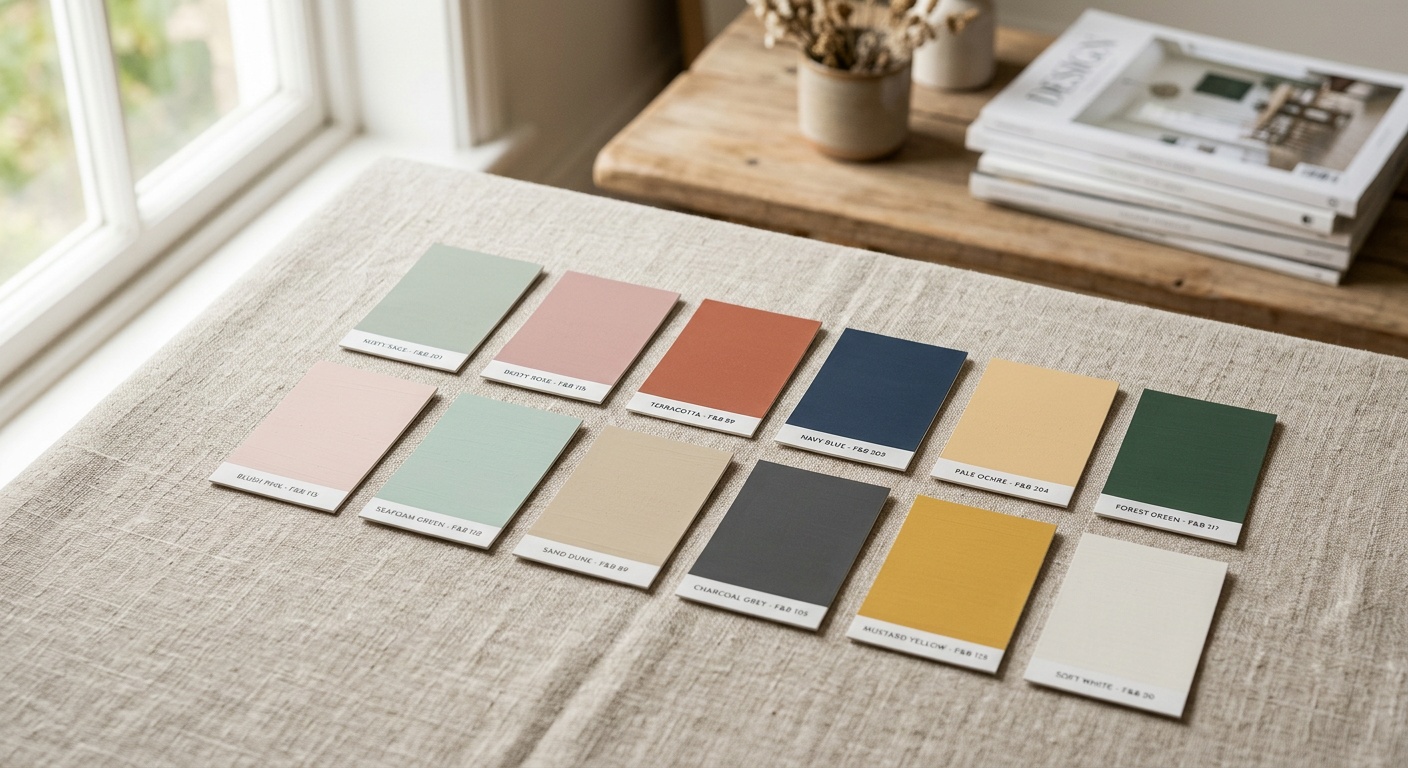
- Decide on your color scheme. Going from a dark color to a light one (or vice versa) typically requires an extra coat, which increases cost. Deciding this beforehand prevents mid-project surprises.
- Know your timeline constraints. If you need the job done before a specific date (property sale, family event, HOA deadline), communicate that upfront. Rush timelines can legitimately increase pricing.
- Set a realistic budget range. In 2026, a standard single-family home exterior paint job ranges from $3,500 to $14,000+ depending on size, condition, and location. Knowing your range helps filter out non-starters early.
Pro Tip: Create a simple one-page “Project Brief” document you can share with every contractor you contact. Include your square footage estimate, photos of any problem areas, your preferred colors (or paint brand preferences), and your target completion window. This levels the playing field and makes every quote more directly comparable.
What an Accurate Quote Must Always Include
An accurate exterior painting quote isn’t just a number on a piece of paper. It’s a detailed document that protects both you and the contractor. If you receive a quote that lacks the following elements, request revisions before making any decisions.
The Non-Negotiable Components
Itemized scope of work. This should clearly list every surface being painted: siding, trim, fascia, soffits, shutters, doors, and any masonry. Vague language like “paint exterior as discussed” is a liability for you.
Surface preparation details. This is arguably the most important section. Proper prep — pressure washing, scraping, sanding, caulking, priming — represents 40–60% of the total labor in a quality paint job. Any quote that glosses over prep work is almost certainly undercutting the real cost.
Specific paint products and quantities. The quote should name the exact paint brand, product line, and finish (e.g., “Sherwin-Williams Duration Exterior Satin, two coats”). It should also estimate the number of gallons to be used. This prevents substitution of inferior products after you’ve signed.
Number of coats. Two coats is the industry standard for exterior work. One coat is rarely sufficient for lasting results. Any quote specifying only one coat should raise immediate questions.
Payment schedule. Reputable contractors typically request a deposit of 25–33% upfront, with progress payments and a final payment upon completion and your satisfaction. Be wary of anyone requesting more than 50% upfront.
Warranty terms. A confident, quality contractor will offer a warranty on labor — typically 2–5 years for exterior work. Paint manufacturers separately warranty their products. Ask for both in writing.
Licensing and insurance confirmation. The quote or accompanying documentation should confirm the contractor’s license number, general liability coverage, and workers’ compensation status. In most U.S. states, you can verify this independently through your state contractor licensing board.
Start and completion dates. Vague timelines are a chronic source of homeowner frustration. Get specific dates or at minimum a defined project duration (e.g., “3–4 business days, weather permitting”).
How to Compare Quotes Like a Pro
Once you have three or more quotes in hand, the real analysis begins. Resist the temptation to simply pick the middle number — that’s not strategic thinking, it’s guesswork dressed up as prudence.
Building an Apples-to-Apples Comparison
The goal is to normalize the quotes so you’re comparing equivalent scopes of work. Create a simple spreadsheet or table with each contractor as a column and key line items as rows. Here’s what that should look like:
| Comparison Factor | Contractor A | Contractor B | Contractor C |
|---|---|---|---|
| Total Quote Price | $4,200 | $6,800 | $9,500 |
| Prep Work Included | Basic wash only | Full prep + caulk | Full prep + prime + caulk |
| Paint Brand/Quality | Unspecified | SW Duration | BM Aura Exterior |
| Number of Coats | 1 coat | 2 coats | 2 coats + spot prime |
| Labor Warranty | None | 2 years | 5 years |
When you lay it out this way, Contractor A’s $4,200 quote suddenly looks very different. You’re paying for one coat of unknown paint with minimal prep and zero warranty protection. Contractor B’s $6,800 quote, by contrast, represents a complete professional service. The comparison becomes rational, not emotional.
Ask the follow-up question: Once you’ve identified gaps, go back to contractors with specific questions. “Can you add full caulking and two coats to your quote? What does that change the price to?” This not only narrows the comparison gap but also reveals how the contractor responds to detailed requests — a meaningful signal of professionalism.
3 Common Challenges and How to Overcome Them
Challenge 1: Contractors Who Won’t Provide Itemized Quotes
Some contractors, particularly high-volume operations, resist itemization and provide only a single lump-sum number. Their reasoning is usually that it prevents clients from trying to pick apart individual line items. While that’s understandable from a business perspective, it leaves you without the information you need to make a fair comparison.
How to overcome it: Rather than asking for a full line-item breakdown, ask targeted questions: “What paint product will you be using and how many gallons?” and “What does your prep process include?” Document the answers in writing via email. If a contractor refuses to answer these basic questions, that itself is your answer — move on.
Challenge 2: Scope Creep After Work Begins
You signed a quote for $7,000 and somehow the final bill is $10,500. This happens because unanticipated issues — hidden wood rot, failed primer adhesion on old paint, additional surface areas “discovered” mid-project — get added without your explicit prior approval.
How to overcome it: Insist on a written change order process before work begins. Any deviation from the original scope — whether it increases or decreases the cost — must be documented and approved by you in writing before the additional work proceeds. Reputable contractors expect and welcome this. It protects them as much as it protects you.
Challenge 3: Seasonal Pricing Fluctuations
Spring and early summer quotes in 2026 are running 12–18% higher than the same scope of work quoted in late summer or fall in most U.S. regions, according to data from the Painting and Decorating Contractors of America (PDCA). Busy contractors simply don’t need to be competitive when their calendars are full.
How to overcome it: If your timeline allows flexibility, request quotes in late August through October. You’ll encounter more available crews, more competitive pricing, and often faster start dates. Exterior painting can be done in temperatures as low as 35°F with the right products, so fall is genuinely viable in most climates. Ask your contractor specifically about their cold-weather painting protocols to ensure quality is maintained.
Real-World Examples: Learning from Homeowners
Case Study 1: The Reyes Family, Phoenix, Arizona (2025)
Maria and David Reyes owned a 2,400-square-foot stucco home that hadn’t been painted in 11 years. They received four quotes ranging from $3,100 to $8,900. They initially leaned toward the $3,100 quote from a solo contractor who seemed personable and offered to start immediately.
Before signing, Maria created a comparison table (similar to the one above) and discovered the low-bidder’s quote included only one coat of paint, no elastomeric sealer for the stucco cracks, and no warranty. When she asked the contractor to revise the quote to include a second coat and stucco crack repair, the price jumped to $5,800. Meanwhile, the $6,400 quote from a licensed company suddenly looked like the fair mid-range option. They hired the $6,400 contractor, received a 3-year warranty, and were satisfied with results that still looked fresh as of mid-2026.
Case Study 2: The Hendersons, Burlington, Vermont (2026)
Jim Henderson tried a different approach. Instead of contacting contractors cold, he spent two hours preparing a detailed project brief with photos of his 1,850-square-foot Victorian home, specific notes on failing caulk around all window trim, and his desired color palette (transitioning from dark green to a soft white, which he knew would require extra coats). He shared this brief with five contractors.
The result? Three of the five quotes came in within $400 of each other — a remarkably tight range that made decision-making far easier. Jim ended up negotiating a slight discount with his preferred contractor in exchange for a fall start date, saving an additional $600. The lesson: preparation creates accuracy, and accuracy creates negotiating power.
2026 Cost Benchmarks at a Glance
Here’s how average exterior painting costs per square foot of paintable surface break down across different home sizes and quality tiers in 2026:
Average Cost per Sq Ft — Exterior Paint (2026 U.S. National Averages)
Source: PDCA 2026 Cost Benchmarking Survey, adjusted for regional labor averages. Costs reflect paintable surface area, not total home square footage.
Understanding where your project falls on this spectrum helps you immediately identify whether an incoming quote is in range or dramatically out of alignment with market expectations.
Frequently Asked Questions
How many quotes should I get for an exterior paint job?
Three quotes is the widely recommended minimum, but five is even better if your schedule allows. With only two quotes, you have no reference point for the middle of the market. With three to five quotes, patterns emerge quickly — you’ll see where most legitimate contractors are pricing similar work, and outliers (both suspiciously low and unusually high) become obvious. Always ensure each contractor performs an in-person or virtual walk-through before quoting. Phone-based or photo-only quotes lack the on-site assessment needed for accuracy.
What’s the single biggest red flag in a painting quote?
The absence of prep work detail is the most significant warning sign. Prep is where the longevity of any exterior paint job is determined. A quote that jumps straight to “two coats of paint” without specifying pressure washing, scraping, sanding, caulking, and priming is either ignoring essential steps or will add them as unanticipated charges later. Other notable red flags include requests for more than 50% upfront, no proof of insurance, an inability to provide references from the past 12 months, and a quote delivered verbally with no written documentation.
Can I negotiate a painting quote, and how do I do it ethically?
Absolutely, and negotiation is entirely normal in the contracting world. The most effective negotiation strategies don’t involve simply asking for a lower number — they involve offering something in return. Agreeing to a flexible start date (particularly off-peak season timing), offering to handle furniture and plant moving yourself, or committing to a prompt payment schedule are all legitimate value exchanges that contractors genuinely appreciate and will often reflect in pricing. You can also ask contractors to match a specific scope — not just a price — from a competing quote. This keeps the negotiation honest and solution-focused for both parties.
Your Painting Project Roadmap: Paint Smart, Not Just Cheap
Here’s where everything comes together. Getting accurate exterior painting quotes is a learnable skill — and once you have it, you’ll never again feel at the mercy of confusing, inconsistent numbers. Here’s your actionable roadmap:
- Prepare your project brief this week. Gather photos, estimate your paintable surface area, decide on colors, and write down your timeline. This 60-minute investment saves hours of confusion later.
- Contact at least four contractors. Use a combination of referrals, verified review platforms (look for contractors with consistent ratings and recent reviews from 2025–2026), and local trade association directories like the PDCA contractor finder.
- Request fully itemized written quotes from every bidder. Use the checklist in this guide as your verification standard. Any quote missing key components gets sent back for revision, not discarded.
- Build your comparison table. Normalize the quotes side by side across the same scope criteria. Let the data guide your decision, not the personality of the salesperson or the lowest number.
- Negotiate from a position of knowledge. Use your research to have informed conversations about timing, scope, and value — not just price.
The broader implication here is significant: the skills you develop getting an accurate painting quote — preparation, scope definition, structured comparison, and informed negotiation — apply to every major home improvement project you’ll ever undertake. You’re not just protecting one paint job; you’re building a homeowner capability that pays dividends for decades.
As the exterior coatings industry continues evolving — with new low-VOC formulations, AI-assisted color matching, and digital quote platforms gaining traction in 2026 and beyond — informed homeowners will always have the advantage over those who simply react to whatever lands in their inbox.
So here’s the question worth sitting with: When you next request a quote for any project on your home, will you be the homeowner who accepts whatever number appears — or the one who knows exactly what that number should include, and why?